

Yin Yoga For Back Bending With Ease & Grace
Back bending with ease and grace requires that the Hip flexors (front of the hips), shoulders, and the whole of the front of the body are flexible and the muscles in the back are strong.
Yin Yoga is a way of opening the body with passive stretches held for a prolonged period of time. If practised correctly it is a very sure and safe way to work on increased flexibility.
the principles of yin yoga
Not Warmed up: The asanas should be done when the body is not warmed up. When the body is warm the muscle will stretch, when it is cold it is easier to access the connective tissue.
Stillness: There should be stillness within the posture. Movement engages the muscles and the aim is to keep the muscle out of the equation and work on the connective tissue. If there is strong discomfort and a need to move then obviously move, but keep the movement to a minimum.
How Long: The postures should be held for a minimum of 1 minute and a maximum of 20. They are often held for 5 minutes.
Edge: As with any asana work you go to your edge where you feel a comfortable stretch and no further. Because the postures are held for so long it is best to start away from the edge so the posture can be held for 5 minutes without moving. This is a matter of personal experimentation.
- Safe Stretching: As with all asana, sensations in your body and your intuition will tell you what is a safe stretch.
- A sharp pain, especially in the knees or spine, is the body saying "NO".
- An electrical sensation or fizzing is the body saying "ENOUGH, STOP!"
- If the sensation continues when you have finished the asana then you probably did too much so back off next time.
- Know the difference between muscles stretching and bone-on-bone contact. There will come a point in any stretch where you reach the limit for your body. A point when you are no longer stretching muscles but just pressing bone on bone. It is important that if you have reached your natural limit in a stretch that you accept it and stop.
- A dull ache in the middle of the muscle is usually OK.
- Tune into what is happening to work out what is a safe stretch for you.
What to do: When you are in the posture it is a good time to work on awareness and focus and patience. It is also a good time to meditate or do energy awareness exercises.
Alignment: In passive postures, there is a need for alignment but it is much softer then in a dynamic practice. Allow the muscles to relax so there is the minimum amount of engagement needed to stay in the posture.
Bandhas: In passive stretching don’t use bandhas.
Breath: use a very gentle subtle ujjayi breath.
Opening The Hip Flexors
Anatomy: hip extension and lengthening the quadriceps.
Supta Virasana

This is one of the most effective stretches for opening the front of the legs. Fold back both legs. Make sure the toes point directly back. The knees should be allowed to find their natural comfortable position so let them come apart if that feels better. If the knees are lifting off the floor, then place a bolster under the back so the knees can rest comfortably on the floor.
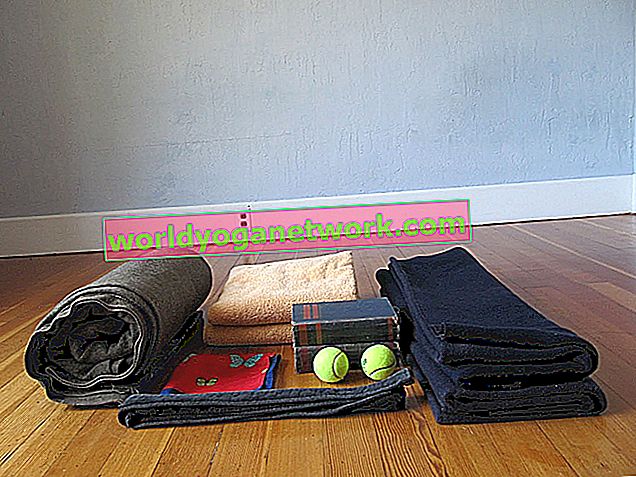
For some people this is a very challenging pose and most people need a block or two or three under the hips. If it is too much to fold both legs back together then fold one leg at a time. Now lie back as far as comfortable. Use as many cushions and blocks as you need.

Dragon
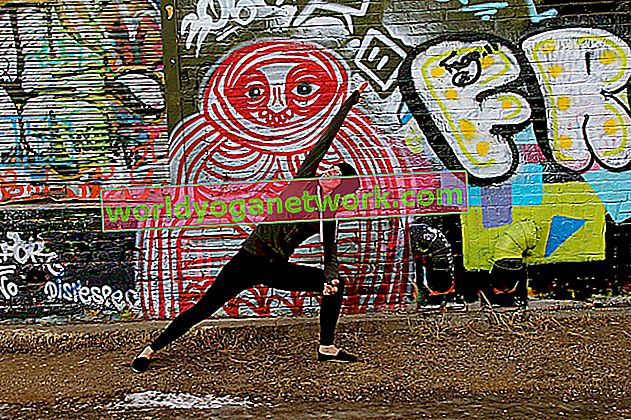
To focus more directly on the hip flexors lunges are very helpful. This sequence of three postures builds up the stretch in the hip flexors very nicely.

1. From down dog step the right foot forward between the hands. Place the back knee on the floor. Point the toes away from you. Relax forwards into the front of the left hip and breathe deep. Keep the front knee directly above the ankle. If the back knee is uncomfortable put a cushion underneath.

2. Add a twist: place the right hand on the right thigh and twist towards the right leg.

3. Lift up the back foot and draw the foot towards the hips. This takes the stretch over two joints and so makes it more intense.
These stretches add strengthening work:
High Lunge

Keep the front knee directly over the ankle. Lift up the back heel and press back into it. Keep the front of the rib cage down. Reach up but relax the shoulders down.
High Lunge with a back bend

Keep the front of the hips relaxing forwards and bend back from the upper back by lifting the chest up towards the ceiling.
Opening The Shoulders For Back Bending
Anatomy: glenohumeral flexion, external rotation and adduction of humerous, lengthening pectoralis major and pectoralis minor and latissimus dorsi.
General Sequence
This is a sequence of four shoulder openers that stretch most muscles in the shoulders and generally warm them up.

Take the right arm across the front of the chest. Place the left forearm to the middle of the right forearm. Draw the right arm in towards the chest.

Now cross the arms as high as you can (if possible above the elbows) with the right arm on top, and hug yourself. Point the bottom arm up towards the ceilling. Wrap the top arm around the arm that’s pointing up. The thumbs should be next you your face. Press the elbows up and away and draw the shoulder blades back and down.

Release the arms and straighten them out in front of you. Bring the palms of the hands together with the the thumbs pointing down and the right hand over the left. Bring the arms up and thread the head through the arms. Gently press the hands together and draw the shoulder blades down.

Finally, release the hands and drop the right arm down the back with the middle finger pointing down the spine. Either use the left hand just above the right elbow to to ease the arm down the back. Or clasp the hands behind the back. Relax the shoulders and bring them back towards being level in a neutral position.
Wall Hanging

Place your forearms against the wall keeping them parallel. Fold forwards so your body and legs are at right angles and your body is parallel to the floor. Make sure you don’t flare the front of the rib cage down towards the floor. Relax the head through the arms.
Dolphin

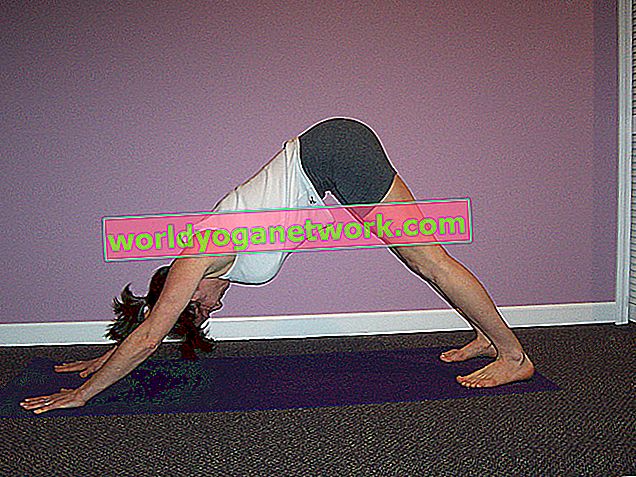
This is essentially downward dog with the forearms down on the floor. Take the chest towards the knees. If it is too intense for the hamstrings then bend the knees.
Football Fan

Hold a belt in your hands and stretch the arms backwards. Make sure you keep the front of the rib cage down towards the hips. The closer the hands, the more intense the stretch.
Opening The Whole Front Of The Body


Lie with a brick under the sacrum. Start with the lowest elevation and spend a few minutes relaxing there. Then take it up to the middle level. Finally if you feel comfortable take it to the highest level. Work your way back down in the same way spending a few minutes at each level. Lie back with knees bent up and the feet flat down on the floor for a few breaths.
Strengthening The Back
These postures are not passive stretches but strengthening postures.
Salabhasana

Begin by lifting knees off ground while toes press down. With active legs, press the feet together and lift. If there is weakness or old injury in the back lift one foot at a time. Try not to tense the muscles in the hips, use the muscles in the lower back. Squeeze the legs together.
Dhanurasana

The lift in this posture comes from pressing the ankles into the hands. Again try not to tense the muscles in the hips. The abdomen stays on the floor and the hips and rib cage lift up. Keep the feet together.
Superman

Lift the right leg and left arm, and then change sides lifting left leg and right arm: this diagonal movement can be strengthening for centre of body.
Sphinx

Place the elbows under the shoulders. The forearms parallel. This posture should be active. Without moving the arms, gently draw the floor towards you and draw the shoulder blades down the back to activate the latisimus dorsi. Lift through the chest.
Cobra

This posture should not be held for a full five minutes. Start with a few breaths and build up slowly. Place the hands underneath the shoulders. Press into the hands to lift the upper body off the floor. Repeat without pressing into the hands and just using the muscles in the back to create lift. Keep the deep hip muscles relaxed.
Conclusion
If you try all these postures you will feel by the intensity which ones are going to be helpful for your body. The more intense the more you need it! As with all yoga practices it is best to do little and often. Start gently and build up over time. If you feel the stretch too strongly either at the time or after the practice then back off next time. There is no rush. Enjoy the process.
Back bends can be some of the most stimulating, exhilarating and challenging of yoga postures. Many people go through intense mental, emotional, physical and spiritual experiences through backbending. For advice about dealing with these experiences see my article When Yoga Makes You Angry.
ENJOY!
Photography: Oliver Fokerd
Leave a Comment
Love this
I really love this -- your explanations are great and I like the pictures with each pose. Thank you!
Post new comment
Today's Popular Articles
User login
Navigation
WYN Newsletter
Keep up to date with our latest!
Popular Tags
Top Contributors
- viriam (9)
- rachelhull (5)
- JillMagso (5)
- Joanne (5)
- madinska (4)
- innac (4)
- mel (4)
- normanblair (3)
- eltonh (3)
- Tribe (3)
Active forum topics
Popular Content
Link To Us
You can use the following code to easily link to us. Just copy and paste it into your site or blog.